The Intel 4004: The World's First Microprocessor
How a humble calculator chip from 1971 packed an entire CPU onto a single sliver of silicon and launched the computing revolution.
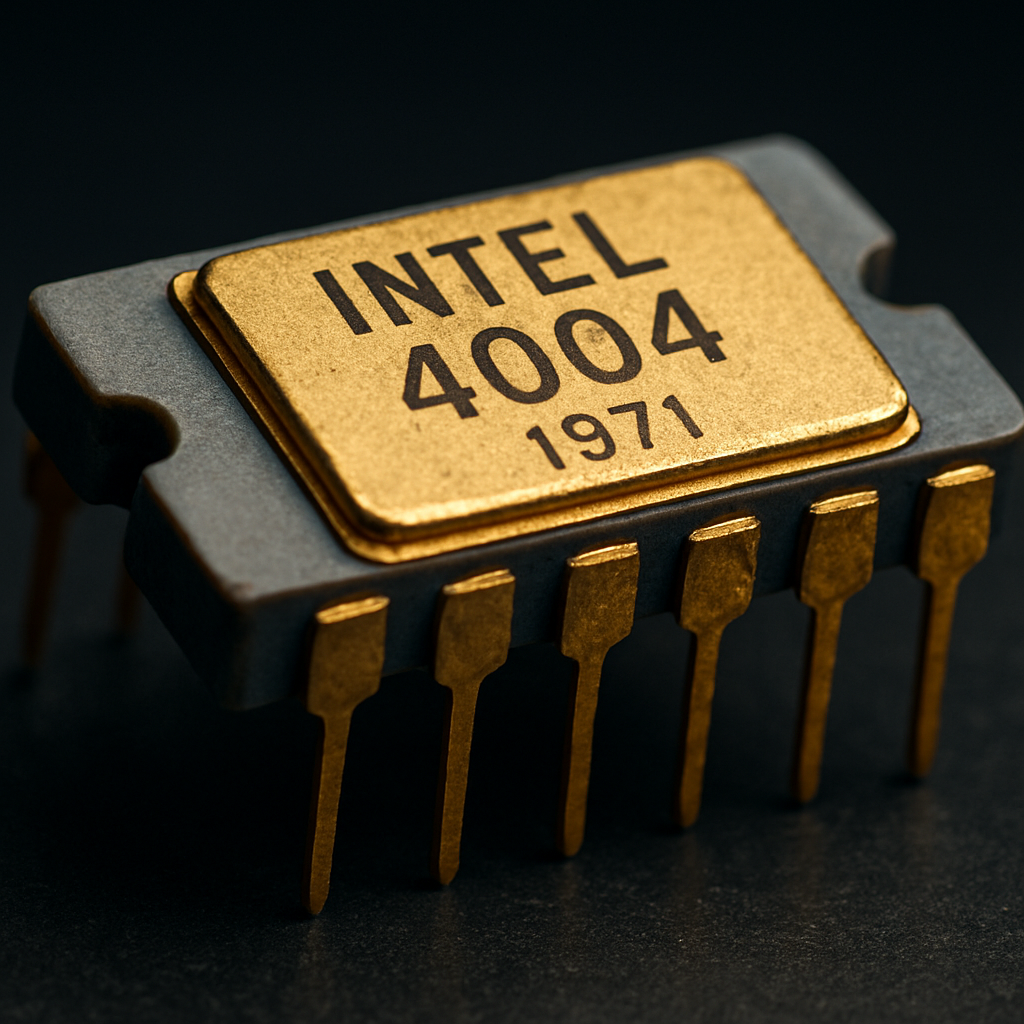
In November 1971, a tiny sliver of silicon barely larger than a fingernail quietly changed the course of human history. The Intel 4004 was the world's first commercially available microprocessor — the first time an entire central processing unit was squeezed onto a single integrated circuit. What began as a humble chip for a desktop calculator became the ancestor of every processor that powers our phones, laptops, cars, and spacecraft today.
An Unlikely Origin
The story of the 4004 doesn't begin in a grand research lab dreaming of personal computers. It begins with a Japanese calculator company called Busicom, which approached Intel in 1969 to build a set of custom chips for a new line of printing calculators.
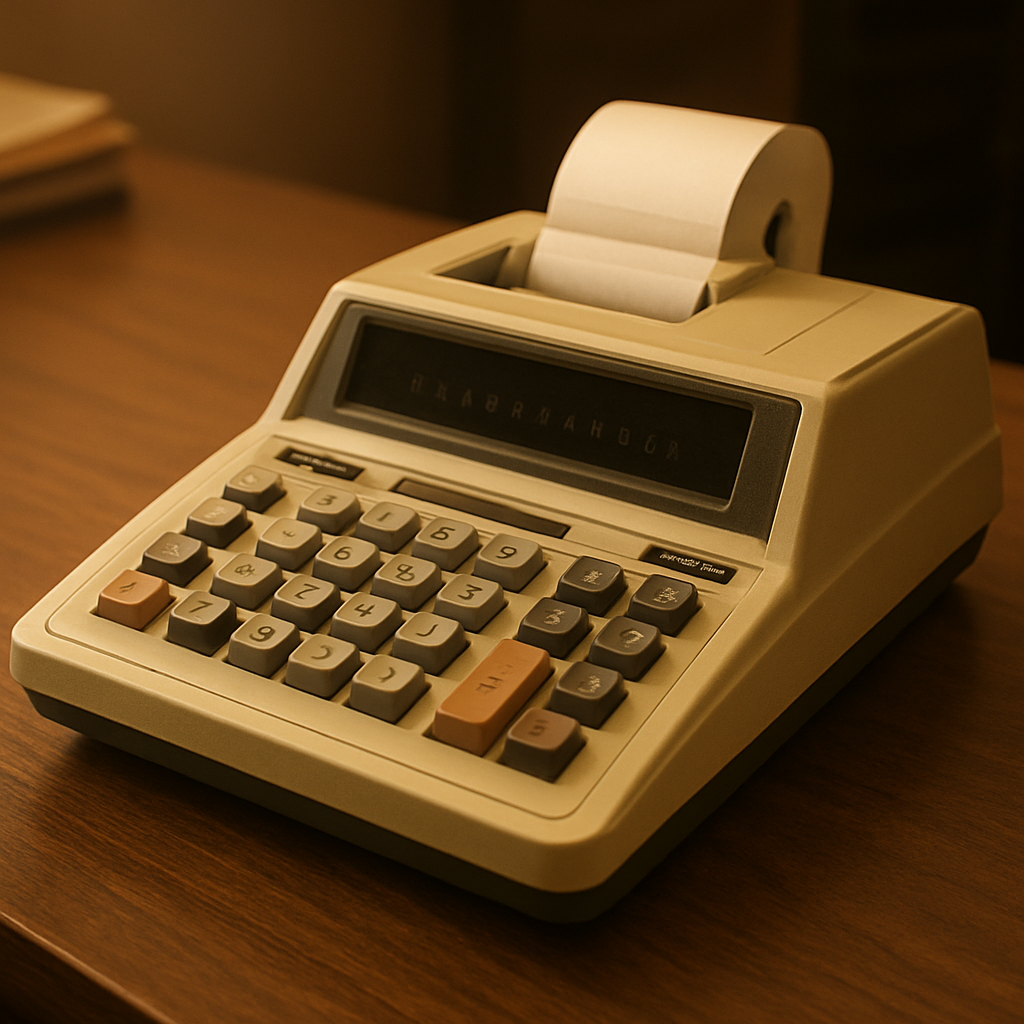
Busicom's original design called for twelve custom chips. Intel engineer Ted Hoff, along with Stanley Mazor, Federico Faggin, and Busicom's Masatoshi Shima, proposed something radical instead: rather than building a dozen single-purpose chips, why not build one general-purpose programmable processor that could be told what to do through software? This single insight — separating the hardware from the logic it executes — is the foundation of computing as we know it.
The Chip Itself
By the standards of its era the 4004 was a marvel of miniaturization. By the standards of today it is almost charmingly tiny:
- 2,300 transistors on a single die (a modern CPU has tens of billions)
- 10 micron manufacturing process (modern chips are measured in single-digit nanometers)
- 740 kHz clock speed — less than one millionth the speed of a modern multi-gigahertz core
- 4-bit data word
- A 16-pin DIP (dual in-line package) measuring just 3mm × 4mm
- Capable of roughly 92,000 instructions per second
Remarkably, Intel claimed this single chip delivered roughly the same computing power as the room-sized ENIAC of 1946 — a machine that used 18,000 vacuum tubes and weighed nearly 30 tons.
Inside the Architecture
The 4004 was the heart of the MCS-4 chip family, a four-chip set that together formed a complete computer system:
- 4004 — the CPU itself
- 4001 — ROM (program storage)
- 4002 — RAM (data storage)
- 4003 — shift register for I/O expansion
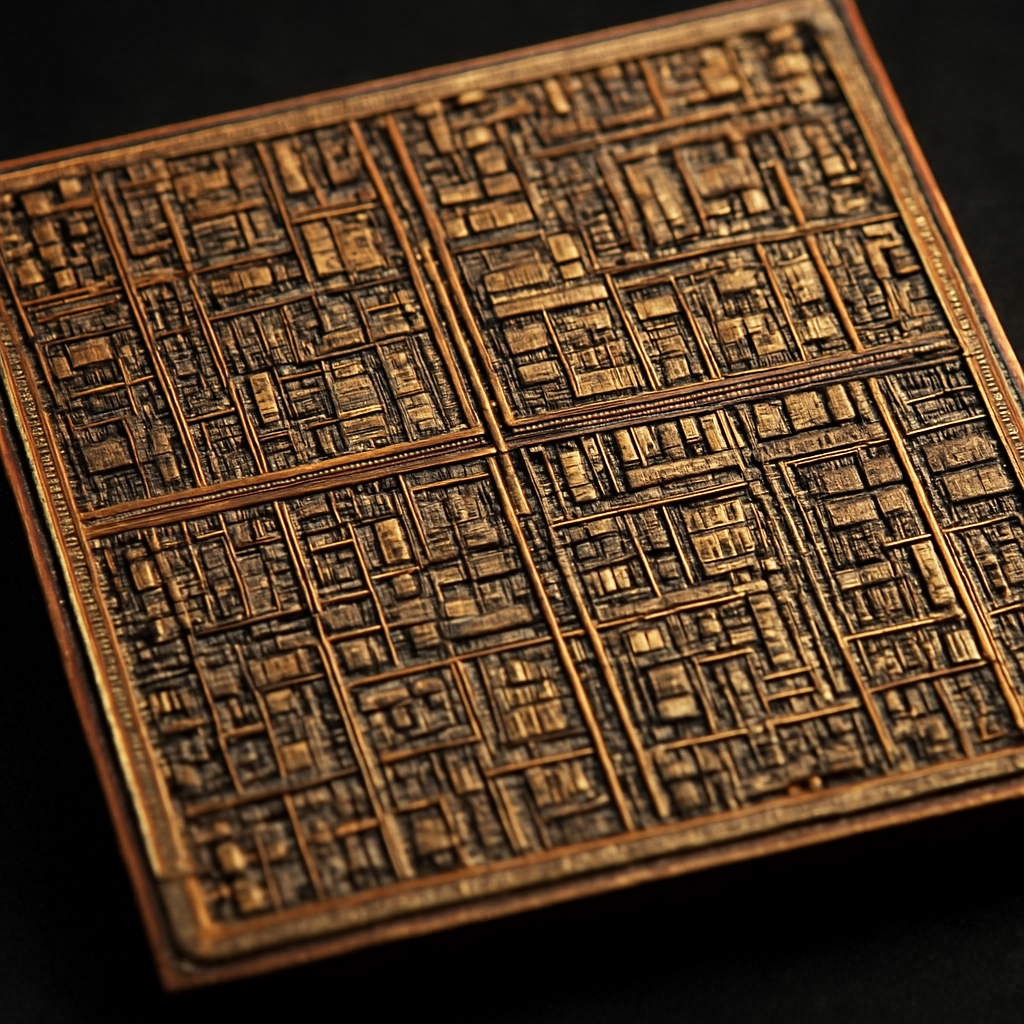
Internally, the 4004 was a Harvard architecture design, keeping program memory and data memory separate. Its register file held sixteen 4-bit registers (which could be paired into eight 8-bit registers), and it featured a 4-bit arithmetic logic unit (ALU), a 12-bit program counter, and a small internal stack that could nest subroutine calls three levels deep.
The instruction set was compact but complete — 46 instructions in total. Because the data path was only 4 bits wide, larger numbers were processed one nibble at a time. A simple addition might look like this in 4004 assembly:
; Add a constant to register R0 on the Intel 4004
        FIM   R0R1, 0      ; load register pair with zero
        LDM   5            ; load immediate value 5 into accumulator
        ADD   R0           ; accumulator = accumulator + R0
        XCH   R0           ; exchange accumulator with R0 (store result)
Memory addressing was equally economical: the chip could directly address 4KB of program ROM and 640 bytes of RAM. Tiny by any modern measure, yet enough to run a fully functional calculator.
Federico Faggin's Breakthrough
Turning the design into working silicon fell to Federico Faggin, who pioneered the use of silicon-gate MOS technology to pack the transistors densely enough to fit. The challenge was so personal to him that he etched his initials — "F.F." — into the corner of the die. Faggin's self-aligned gate process didn't just make the 4004 possible; it became a cornerstone technique for the entire semiconductor industry.
The Impact
When Intel bought back the rights to the chip from Busicom for $60,000 and advertised it in Electronic News in November 1971 with the headline "Announcing a new era of integrated electronics," few grasped how literally true that slogan would prove to be.
The 4004 established the template that the entire industry would follow:
- Programmability over fixed function — software became the way to define behavior, decoupling innovation from silicon respins.
- The microprocessor as a product — Intel transformed from a memory company into the processor giant we know today.
- A direct lineage — the 4004 led to the 8008, then the 8080, the 8086, and the entire x86 dynasty that still dominates desktops and servers.
- The democratization of computing — putting a CPU on a cheap chip made personal computers, embedded systems, and eventually the smartphone economically possible.
Every device with a "brain" — from microwave ovens to Mars rovers — traces its heritage back to this one small chip. The 4004 proved that general-purpose computation could be cheap, small, and mass-produced. It was less a product than a starting gun.
Conclusion
The Intel 4004 packed just 2,300 transistors and ran at a fraction of a megahertz, yet it ignited a revolution that now sees billions of transistors switching billions of times per second in the palm of your hand. It is a perfect reminder that the most profound technological shifts often arrive disguised as modest engineering compromises — in this case, a calculator chip that dared to be programmable.